
 -->
-->
Xtend Technologies provides the ultimate in technology solutions for today's home and business owners. Our clients enjoy state-of-the-art electronics for home theater, audio-video, automation, commercial projects, and IT networks. We offer custom solutions that integrate elegantly or disappear entirely within the home or building's design. #4 - COM Port Selection. The COM port you select in the software must match the physical port on the PC used for the connection. This was rarely a problem on older computers with a built-in serial port because the port was almost always COM1 and didn’t change. TVIT driver above includes RP1210 drivers. DLL Discovery: Sample registry code for PassThru DLL Discovery DT Tech2Win Driver 32-Bit: Tech2Win Driver for Drew Technologies devices. Uninstall old driver first. DT Tech2Win Driver 64-Bit: Tech2Win Driver for Drew Technologies devices. Uninstall old driver first.
For general information about developing drivers see Getting started with Windows drivers and Write your first driver.
The majority of the driver technology information is the same for all editions of Windows 10. When you must make special considerations for a particular edition of Windows, such as for Windows 10 Mobile, we explicitly called these out in each technology area.
Windows drivers
You can create a Windows Driver—a driver that uses a subset of the available interfaces—to run on all editions of Windows 10. Where possible, use a Windows Driver to enable deployment of your drivers on multiple devices. For more information about how to build, install, deploy, and debug a Windows Driver for Windows 10, see Getting Started with Windows Drivers and Deploying a Driver to a Test Computer.

Device drivers and Windows 10 for desktop computers
For information about the tools used to develop desktop drivers, see Driver Development Tools and Tools for Verifying Drivers. For information about deploying drivers to Windows 10 on a desktop, see Device and Driver Installation. For information about troubleshooting driver installation, see Troubleshooting Configuration of Driver Deployment, Testing and Debugging.
Driver technologies
Related sections
-->This topic describes which WDM drivers can be ported to Windows Driver Frameworks (WDF), and how to decide whether to port to Kernel-Mode Driver Framework (KMDF) or User-Mode Driver Framework (UMDF).

Which WDM drivers can I port to WDF?
Whether a particular driver can be ported to WDF depends on the following criteria:
- The operating system versions on which the driver runs
- The type of device that the driver supports
- The driver model that the driver uses
In general, you can use KMDF or UMDF to write drivers that conform to WDM, supply entry points for the major I/O dispatch routines, and handle IRPs.
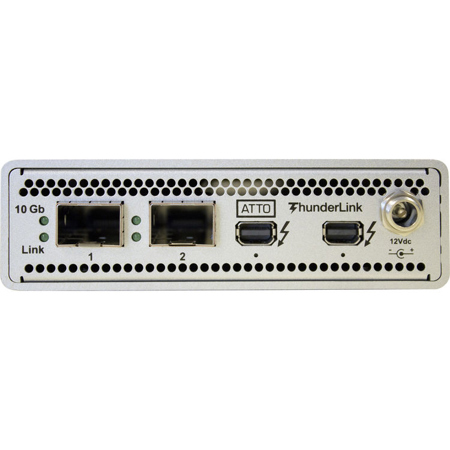
Drivers Xtend Technologies (p) Port Devices Gigabit
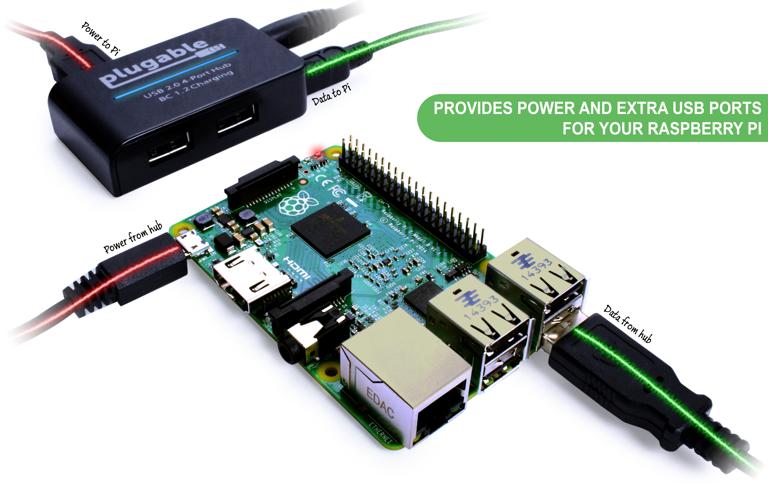
For some device types, system-supplied device class and port drivers provide driver dispatch functions and call a vendor-supplied miniport driver to handle specific I/O details. These miniport drivers are essentially callback libraries and are not supported by WDF. In addition, WDF does not support device types that use Windows Image Acquisition (WIA).
You can use KMDF to create drivers that run on Windows 2000 and later. You can use UMDF version 1 to write drivers that run on Windows XP and later, and UMDF version 2 to target Windows 8.1 and later.
For information about device and driver types that UMDF and KMDF support, see Choosing a Driver Model.
Which framework should I port my WDM driver to, KMDF or UMDF 2?
Review the list of KMDF-only functionality in Comparing UMDF 2.0 Functionality to KMDF. If your driver does not require any of these features, and you are targeting Windows 8.1 or later, open a new UMDF 2 driver template in Visual Studio.
If you realize later that you need a KMDF-only feature, it's straightforward to convert your UMDF 2 driver to KMDF, as described in How to convert a KMDF driver to a UMDF 2.0 driver (and vice-versa).
You can also write a mode-agnostic driver, meaning one that can be compiled using either KMDF or UMDF. To write a mode-agnostic driver, start with a UMDF 2 template. Use the DDI versioning info listed in Summary of WDF Callbacks and Methods to ensure that you only call methods that are available in both KMDF and UMDF 2. Conditionally tag any header references with the preprocessor macros described in How to convert a KMDF driver to a UMDF 2.0 driver (and vice-versa). To switch your driver, you would create an empty driver project using a Visual Studio template for the target framework, and copy your source code over.
Drivers Xtend Technologies (p) Port Devices For Sale
Related topics