
- Start Network Network & Wireless Cards Drivers
- Usb Wireless Network Card
- Start Network Network & Wireless Cards Drivers
- Wireless Network Card For Pc
Current vacancies
In Windows 8.1 and Windows 10, just right-click on the Start Menu and choose Control Panel from the list. In the Control Panel, you can click on the Network and Internet category and then click on Network and Sharing Center. If you are in icon view, just click directly on Network and Sharing Center.
Work with the Start Network
Working at the Start Network is an opportunity and a challenge to change the way we do things in the humanitarian sector. We’re a team of about forty people committed to doing things differently. We’re keen to attract new people from outside the sector with an interest in learning about humanitarian action. For some roles, we need more technical expertise, but, for many roles, we are looking for relevant transferable skills and the right attitude. We’re also looking for people who align with our values:
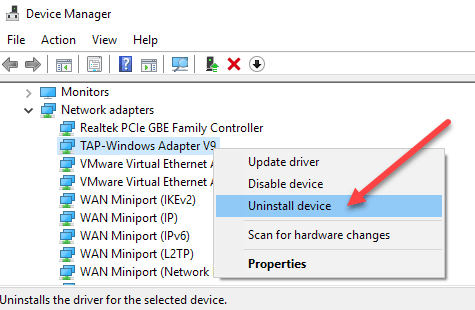
Network Card: Broadcom 440x 10/100 Integrated Controller Problem: This network adapter cannot start. There is a yellow circle on this device in the Device Manager. The properties show 'this device cannot start (code 10)'. In the network connections, I cannot see 'Local area connection', only my wireless connection is working. Start using your EIP Card. Your Economic Impact Payment Card (EIP Card) contains the money you are receiving under the COVID-related Tax Relief Act of 2020 and the Coronavirus Aid, Relief, and Economic Security Act (CARES Act). The quickest way to get to it is by clicking on Start and typing in network. This will instantly bring up the app in the list. This will instantly bring up the app in the list. In all versions of Windows, the app is located in the Control Panel.
- We put people first: the communities we serve come first in our decision-making and programming.
- We are brave: we have great ambition and are willing to explore new things and are willing to take risks to achieve it.
- We operate collectively: we leverage the value of working as a network, sharing risk and resources and learning together.
- We are inclusive: we see the value in diverse perspectives and work to remove the barriers that prevent voices from being heard.
- We are open: we work transparently and with integrity, building mutual trust in all levels of our work, from governance to programming.
Our roles are open to discussion about flexible working, such as part-time working, formalised flexitime, fixed (non-standard) working hours, working from home and job-sharing. While our team is office-based, home working is part of our culture. We all work at least a day a week from home. Start Network embraces diversity, promotes equality of opportunity and eliminates unlawful discrimination. We are an equal opportunities employer and treat every application on merit alone. We particularly welcome applications from disabled, black, Asian and minority ethnic (BAME), and LGBT and non-binary candidates. We offer a guaranteed interview scheme for disabled applicants who meet our minimum selection criteria.
Start Network Network & Wireless Cards Drivers
Please feel free to contact us by email if you have any questions about our current vacancies.
Here's a flavour of what we offer:
Flexible working with options to work from home
Contributory pension
Life assurance
Family friendly policies, particularly maternity pay
Training and development opportunities for individuals and cross-organisationally
25 days’ holiday plus 2 company days over the Christmas period
Centrally located WeWork office with onsite drinks and snacks available free of charge
Access to cultural talks, events, pop-up sales, and a place to meet and socialise after work

Discounts at local cafes and restaurants in association with WeWork
The Start Network is an independent charity, as of May 2019. We also work with Save the Children UK, which manages a number of our programmes. Some of our roles adverstised below, may redirect you to the Save the Children website to the relevant application page.
Please refer to our privacy policy including our candidate privacy notice regarding the treatment of your data.
When applying for roles at Start Network, please complete the Equality and Diversity Monitoring Form.
Usb Wireless Network Card
So you have configured your service to run after network.target but it still gets run before your network is up? And now you are wondering why that is and what you can do about it?
LSB init scripts know the $network facility. As this facility is defined only very unprecisely people tend to have different ideas what it is supposed to mean. Here are a couple of ideas people came up with so far:

Start Network Network & Wireless Cards Drivers
- The network management software is up
- All 'configured' network interfaces are up and an IP address has been assigned to each
- All discovered local hardware interfaces that have a link beat have an IP address assigned, independently whether there is actually any explicit local configuration for them
- The network has been set up precisely to the level that a DNS server is reachable
- Similar, but some specific site-specific server is reachable
- Similar, but 'the Internet' is reachable
- All 'configured' ethernet devices are up, but all 'configured' PPP links which are supposed to also start at boot don't have to be yet
- A certain 'profile' is enabled and some condition of the above holds. If another 'profile' is enabled a different condition would have to be checked
- Based on the location of the system a different set of configuration should be up or checked for
- At least one global IPv4 address is configured
- At least one global IPv6 address is configured
- At least one global IPv4 or IPv6 address is configured
And so on and so on. All these are valid approaches to the question 'When is the network up?', but none of them would be useful to be good as generic default.
Modern networking tends to be highly dynamic: machines are moved between networks, network configuration changes, hardware is added and removed, virtual networks are set up, reconfigured and shut down again. Network connectivity is not unconditionally and continuously available, and a machine is connected to different networks at different times. This is particularly true for mobile hardware such as handsets, tablets and laptops, but also for embedded and servers. Software that is written under the assumption that network connectivity is available continuously and never changes is hence not up-to-date with modern standards. Well-written software should be able to handle dynamic configuration changes. It should react to changing network configuration and make the best of it. If it cannot reach a server it must retry. If network configuration connectivity is lost it must react. Reacting to local network configuration changes in daemon code is not particularly hard. In fact many well-known network-facing services running on Linux have been doing this for decades. A service written like this is robust, can be started at any time, and will always do the best of the circumstances it is running in.
$network is a mechanism that is required only to deal with software that assumes continuous network is available (i.e. of the simple non-well-written kind). Which facet of it it requires is undefined. An IMAP server might just require a certain IP to be assigned so that it can listen on it. OTOH a network file system client might need DNS up, and the service to contact up, as well. What precisely is required for $network is not obvious and can be different things depending on local configuration.
A robust system boots up independently of external services. More specifically, if a network DHCP server does not react this should not slow down boot on most setups, but only for those where network connectivity is strictly needed (for example, because the host actually boots from the network).

Concepts in systemd
In systemd, three target units take the role of $network:
network.targethas very little meaning during start-up. It only indicates that the network management stack is up after it has been reached. Whether any network interfaces are already configured when it is reached is undefined. Its primary purpose is for ordering things properly at shutdown: since the shutdown ordering of units in systemd is the reverse of the startup ordering, any unit that is order After=network.target can be sure that it is stopped before the network is shut down if the system is powered off. This allows services to cleanly terminate connections before going down, instead of abruptly losing connectivity for ongoing connections, leaving them in an undefined state. Note thatnetwork.targetis a passive unit: you cannot start it directly and it is not pulled in by any services that want to make use of the network. Instead, it is pulled in by the network management service itself. Services using the network should hence simply place an After=network.target dependency in their unit files, and avoid any Wants=network.target or even Requires=network.target.network-online.targetis a target that actively waits until the nework is 'up', where the definition of 'up' is defined by the network management software. Usually it indicates a configured, routable IP address of some kind. Its primary purpose is to actively delay activation of services until the network is set up. It is an active target, meaning that is may be pulled in by the services requiring the network to be up, but is not pulled in by the network management service itself. By default all remote mounts defined in/etc/fstabpull this service in, in order to make sure the network is up before it is attempted to connect to a network share. Note that normally, if no service requires it, and if no remote mount point is configured this target is not pulled into the boot, thus avoiding any delays during boot should the network not be available. It is strongly recommended not to pull in this target too liberally: for example network server software should generally not pull this in (since server software generally is happy to accept local connections even before any routable network interface is up), its primary purpose is network client software that cannot operate without network.network-pre.targetis a target that may be used to order services before any network interface is configured. Its primary purpose is for usage with firewall services that want to establish a firewall before any network interface is up. It's a passive unit: you cannot start it directly and it is not pulled in by the the network management service, but by the service that wants to run before it. Network management services hence should set After=network-pre.target, but avoid any Wants=network-pre.target or even Requires=network-pre.target. Services that want to be run before the network is configured should place Before=network-pre.target and also set Wants=network-pre.target to pull it in. This way, unless there's actually a service that needs to be ordered before the network is up the target is not pulled in, hence avoiding any unnecessary synchronization point.
Whenever systemd encounters a $network dependency in LSB headers of init scripts it will translate this to a Wants= and After= dependency on network-online.target hence staying relatively close to traditional LSB behaviour.
Wireless Network Card For Pc
For more details, see the systemd.special(7) man page.
Cut the crap! How do I make sure that my service starts after the network is really online?
Well, that depends on your setup and the services you plan to run after it (see above). If you need to delay you service after the network is up, include
in the .service file.
This will ensure that all configured network devices are up and have an IP address assigned before the service is started.network-online.target will time out after 90s. Enabling this might considerably delay your boot even if the timeout is not reached.
The right 'wait' service must be enabled too (NetworkManager-wait-online.service if NetworkManager is used to configure the network, systemd-networkd-wait-online.service if systemd-networkd is used, etc.). systemd-networkd.service has Also=systemd-networkd-wait-online.service in its [Install] section, so when systemd-networkd.service is enabled, systemd-networkd-wait-online.service will be enabled too, which means that network-online.target will include systemd-networkd-wait-online.service when and only when systemd-networkd.service is enabled. NetworkManager-wait-online.service is set up similarly. Verify that the right service is enabled (usually only one should be):
What does this mean for me, a Developer?
If you are a developer, instead of wondering what to do about network.target, please just fix your program to be friendly to dynamically changing network configuration. That way you will make your users happy because things just start to work, and you will get fewer bug reports as your stuff is just rock solid. You also make the boot faster for your users, as they don't have to delay arbitrary services for the network anymore (which is particularly annoying for folks with slow address assignment replies from a DHCP server).
Here are a couple of possible approaches:
- Watch rtnetlink and react properly to network configuration changes as they happen. This is usually the nicest solution, but not always the easiest.
- If you write a server: listen on [::], [::1], 0.0.0.0 and 127.0.0.1 only. These pseudo-addresses are unconditionally available. If you always bind to these addresses you will have code that doesn't have to react to network changes, as all you listen on is catch-all and private addresses.
- If you write a server: if you want to listen on other, explicitly configured addresses, consider using the IP_FREEBIND sockopt functionality of the Linux kernel. This allows your code to bind to an address even if it is not actually (yet or ever) configured locally. This also makes your code robust towards network configuration changes.